To budget for streaming, add up your subscriptions, a share of your internet cost, any VPN, and the one-off device spread over its lifespan — then set a monthly cap and use free public broadcasters to stay within it. This guide gives the calculation method and example budgets for singles, couples and families. For prices to plug in, see our European streaming prices guide.
The Four Cost Components
| Component | Type | Notes |
|---|---|---|
| Streaming device | One-off | A €69 device over 3 years ≈ €2/month |
| Subscriptions | Monthly | The variable you control — biggest lever |
| Internet | Monthly (shared) | Need enough speed for your quality |
| VPN (optional) | Monthly | Privacy on public Wi-Fi; ≈ €3–5/month |
The device and internet are largely fixed and shared with other uses; subscriptions are where budgeting effort pays off.
The Calculation
Monthly streaming budget = (device ÷ months of use) + subscriptions + VPN — with internet counted separately as it’s shared.
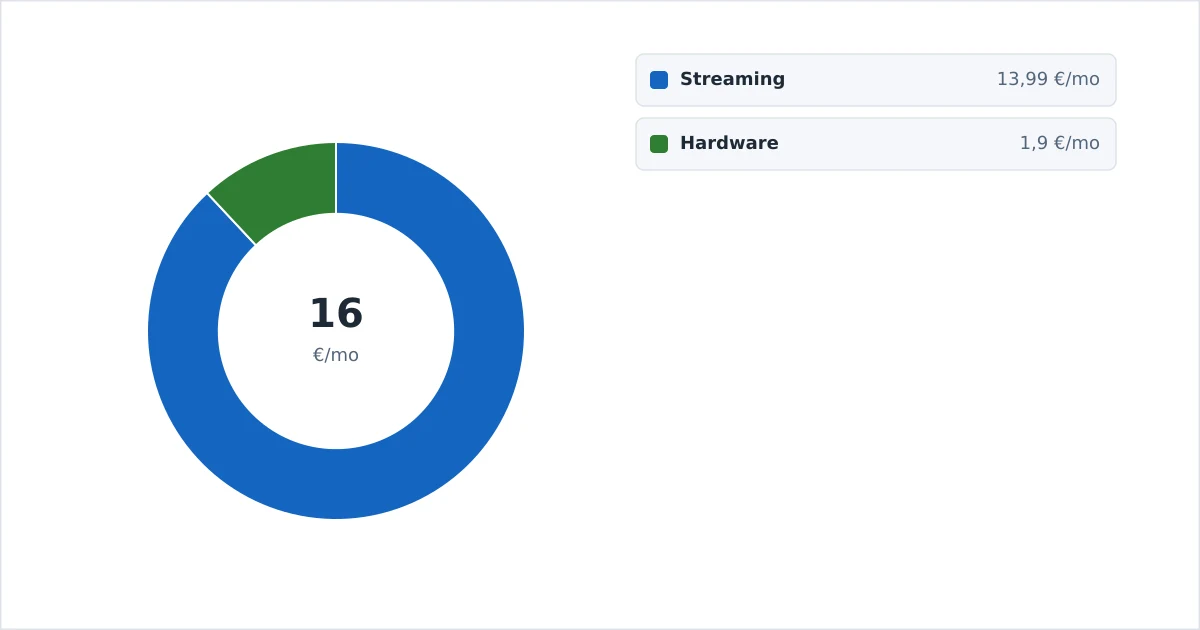
For example: a €69 device over 36 months (≈ €1.90) + one €13.99 subscription = ≈ €16/month, plus your existing internet.
Example Budgets
Illustrative monthly spend; adjust to your country’s prices.
| Household | Typical setup | ≈ Monthly |
|---|---|---|
| Single (thrifty) | Free public TV + one ads tier | €7–12 |
| Single (standard) | Free TV + one Standard service | €14–18 |
| Couple | One Premium service + free layer | €18–25 |
| Family | Premium + a second service + free TV | €30–45 |
| Enthusiast | 2–3 services + 4K + VPN | €45–60 |
Device cost (one-off) is spread over years, so it barely moves the monthly figure.
Setting and Keeping Your Cap
- Pick a monthly maximum you’re comfortable with.
- Cover the free layer first — public broadcasters and FAST channels.
- Add one paid core — on an ads tier if the cap is tight.
- Only add a second if it fits — otherwise rotate.
- Review monthly and cancel what you’re not watching.
The Bottom Line
A streaming budget is mostly about subscriptions — the device and internet are one-off or shared. Add them up, spread the device over its lifespan, set a cap, and anchor on the free layer to stay within it. Use our save on streaming guide and rotate strategy to keep costs down, plug in real figures from our European streaming prices guide, plan hardware in our best setup under €100 and under €300 guides, and look up any term in the streaming glossary.