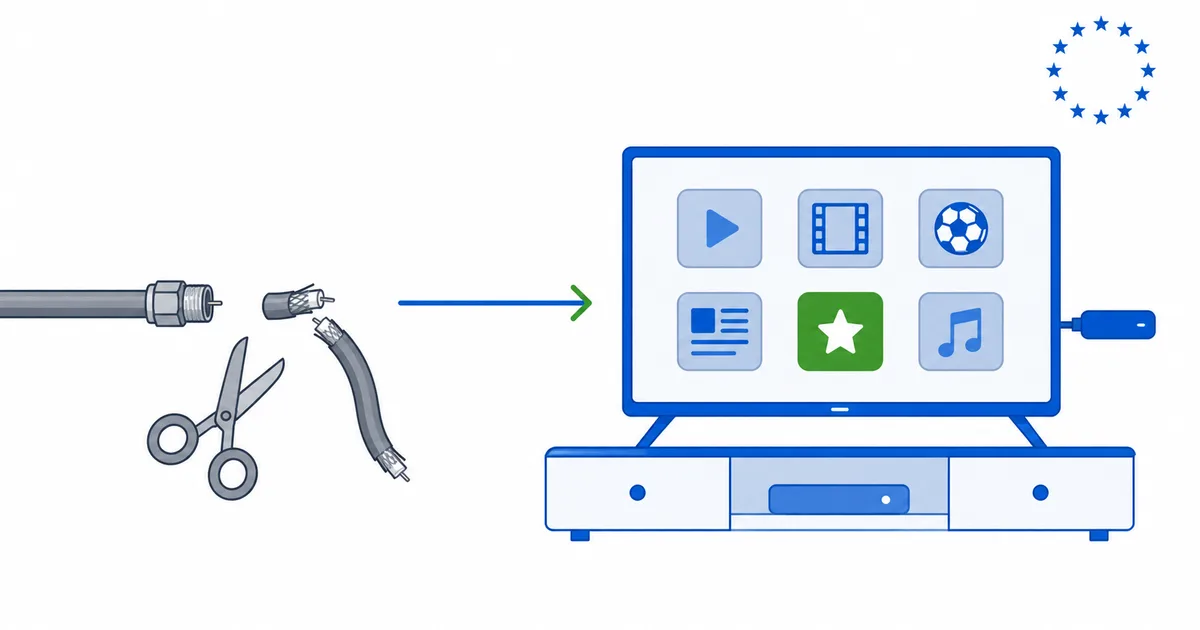
Cord-cutting means replacing traditional cable or satellite TV with internet streaming — swapping a fixed channel package for streaming apps, free public broadcaster services, and optional live TV or sport add-ons. Done well, it cuts your bill and gives you more control; the main catch is sport, where rights are split. This European guide walks through the gear, the licensed services, live TV and sport, and how to keep costs down.
What Cord-Cutting Is
Cord-cutting is dropping cable or satellite TV in favour of streaming over your broadband. Instead of paying for a big bundle of channels you rarely watch, you assemble your own mix:
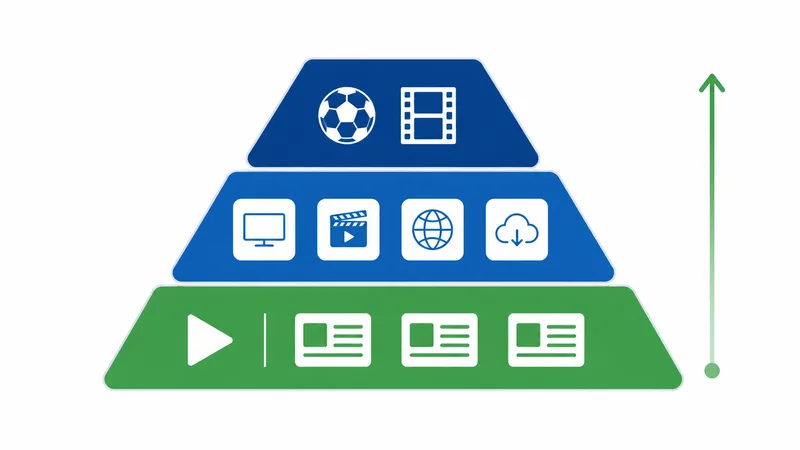
- Free public broadcaster apps and ad-supported services as a base.
- Paid subscription services for the catalogues you want.
- Optional live TV and sport add-ons where needed.
You watch it all on a smart TV or streaming device, with the freedom to change or cancel any part month to month.
What You Need
The essentials are modest:
| Component | What to get | Why |
|---|---|---|
| Internet | ~25 Mbps+ for 4K | Steady streaming; see speed guide |
| Device | Streaming stick/box or smart TV | Runs the apps; see best devices |
| Free apps | Public broadcaster + FAST | Your no-cost base layer |
| Paid service(s) | One or two, chosen | Catalogues and originals you want |
| Optional | Live TV / sport, VPN | Only if you need them |
A wired Ethernet link to the main TV keeps 4K smooth, and a capable device covers every major app.
Free and Paid Services in Europe
Europe is unusually well served by free, legal streaming, which makes cord-cutting cheaper here than in many markets:
- Public broadcaster Mediatheken and catch-up — high-quality news, documentaries and drama, publicly funded.
- FAST channels and free tiers — live ad-supported channels from major platforms.
- Paid services — global platforms plus strong local players, chosen for what you watch.
How this looks varies by country. Our guides to streaming in Germany, France, Spain and Italy map the licensed services market by market, and our free vs paid guide explains how to blend them.
Live TV and Sport
Two worries stop people cutting the cord — and both are solvable:
- Live TV is easier than expected: public broadcasters stream many live channels free, FAST services add more, and paid live-TV options fill gaps.
- Sport is the hard part. Rights are split between providers and by country, so full coverage of a league can need more than one subscription. This is where budgets balloon.
Before you cancel: if sport matters, check the current rights for your competitions — they rotate between cycles and providers. Our country guides note how sport rights are split in each market, so you subscribe only to what you actually need.
Travelling within the EU? Your paid subscriptions follow you thanks to EU portability rules.
Step-by-Step Switch
A low-risk way to cut the cord:
- Check your connection — aim for 25 Mbps+ for 4K; test it before committing.
- Get a device — a capable streaming stick or box, or use a good smart TV.
- Add the free base — your country’s public broadcaster apps and a FAST service.
- Add one or two paid services for the catalogues you watch most.
- Handle sport deliberately — subscribe only to the competitions you follow.
- Run both briefly, confirm your streaming setup covers your viewing, then cancel cable.
- Trim regularly — rotate and cancel idle subscriptions to keep the bill low.
The Bottom Line
Cord-cutting in Europe is easier and cheaper than in most places, thanks to excellent free public broadcasters and FAST channels. Get a decent connection and device, build a free base, add one or two paid services, and treat sport as the one area to plan carefully around split, country-specific rights. Run streaming alongside cable briefly, confirm it covers you, then cancel — and rotate subscriptions to keep spending lean.
Save the essentials with our streaming cheat sheet, and look up any term in the streaming glossary.