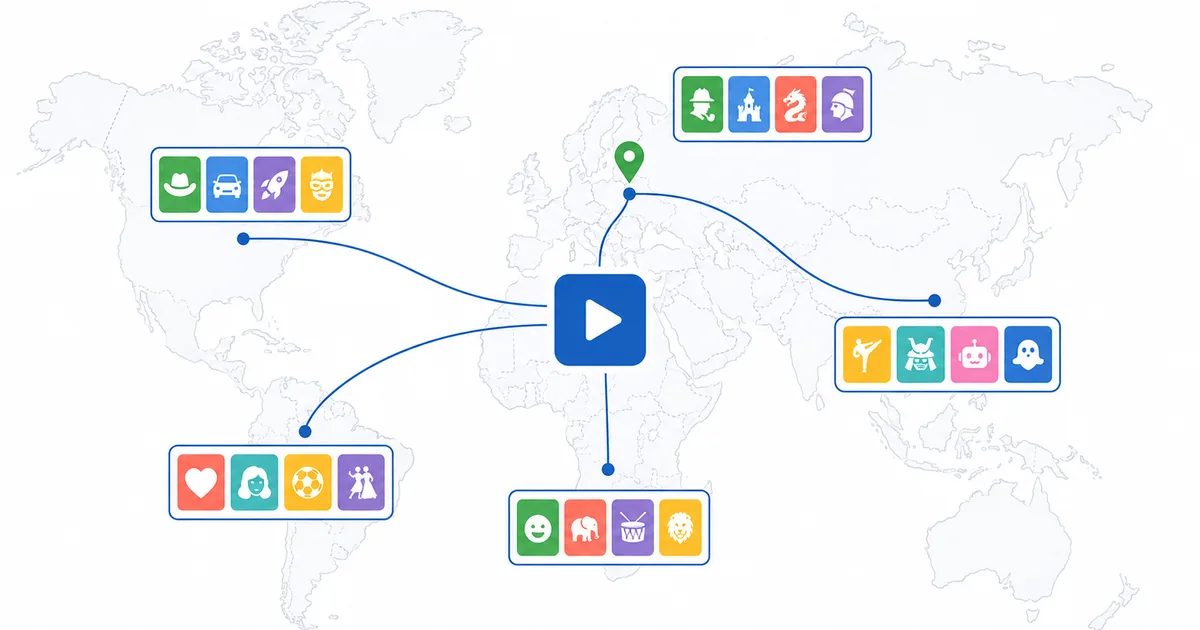
Geo-blocking restricts streaming content based on your location — detected from your IP address — so each country sees a different catalogue. It exists because studios license films and shows separately for each country, meaning a service legally holds different rights in different places. This guide explains why geo-blocking happens, how it detects your location, and how EU portability rules change the picture for travellers.
What Geo-Blocking Is
Geo-blocking (or geo-restriction) is the practice of showing, hiding, or changing content based on where you are. On a streaming service it appears in three ways:
- Different catalogues — the same app shows different films and shows per country.
- Blocked titles — a specific title is unavailable in your region.
- Different services entirely — some platforms only operate in certain countries.
It is not arbitrary: it follows the content licences a service has bought for each market.
Why It Exists
The root cause is how film and TV rights are sold. Studios license content territory by territory, often to different buyers:
- A film may be on one platform in France and a rival platform in Germany.
- Sports rights are famously split by country — and even within a country between providers.
- Local originals, dubbing, language and national regulations further shape each catalogue.
So when a service geo-blocks a title, it is usually because it simply does not hold the rights to show it where you are. Our country guides — like streaming in Germany and streaming in France — map out which licensed services actually carry what, per country.
How It Detects Your Location
Services determine your country from several signals:
| Signal | What it reveals |
|---|---|
| IP address | Your rough geographic location (the main method) |
| Account region | The country you signed up and pay in |
| Payment method | The country of your card or billing |
| GPS (mobile) | Precise device location on phones/tablets |
| DNS / network | Additional location hints |
Your IP address is the primary check — it maps to a country via the network route you connect through. If your detected country does not match a title’s licence, the service hides or blocks it.
EU Portability Changes Things
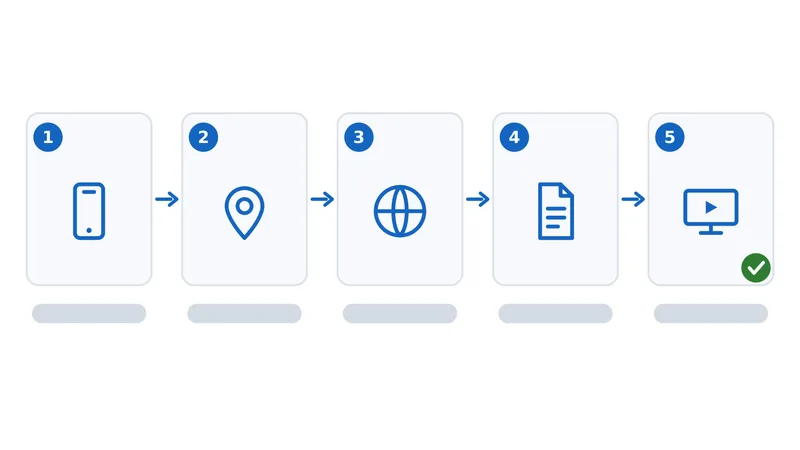
For people travelling within the EU, there is a legal solution that sidesteps geo-blocking entirely: the EU portability regulation. It requires paid streaming services to let you access your home subscriptions while temporarily in another EU country, as if you were at home.
- It applies to services you pay for in your home country.
- It works automatically — no workarounds needed.
- It covers temporary stays, such as holidays and business trips.
We cover the details, limits and how to use it in our dedicated guide to EU portability rules.
VPNs and the Limits of Bypassing
A VPN changes your apparent country by routing traffic through another location, which some people use to try to see other catalogues. Be realistic about this:
- Major services detect and block known VPN servers, so it is unreliable and often stops working.
- It typically breaks the service’s terms of use, which can risk your account.
- It does not change the underlying licensing — you are just hiding your location.
The practical takeaway: within the EU, rely on portability for travel. Use a VPN for its real strengths — privacy on public Wi-Fi and bypassing traffic-specific throttling — rather than as a reliable unblocking tool.
The Bottom Line
Geo-blocking makes catalogues differ by country because content is licensed territory by territory, and services detect your location mainly from your IP address. It is a licensing reality, not a glitch. For EU travellers, portability rules legally carry your home subscriptions with you, which is the proper fix. VPNs change your apparent location but are unreliable for unblocking and often break service terms, so treat them as privacy tools first.
Next, read the details of EU portability rules, or learn the tool behind location changes in how VPNs work.
Not sure about a term on this page? Look it up in the streaming glossary.