IPTV, OTT and streaming all describe video delivered over the internet, and in everyday use they overlap heavily — but they are not synonyms. Streaming is the broad act of playing video as it arrives; IPTV is video sent over a managed, controlled network (often an operator’s own); and OTT (“over-the-top”) is video sent across the open public internet to any device, like Netflix. This guide untangles the three terms, shows where they overlap, and helps you use each one correctly.
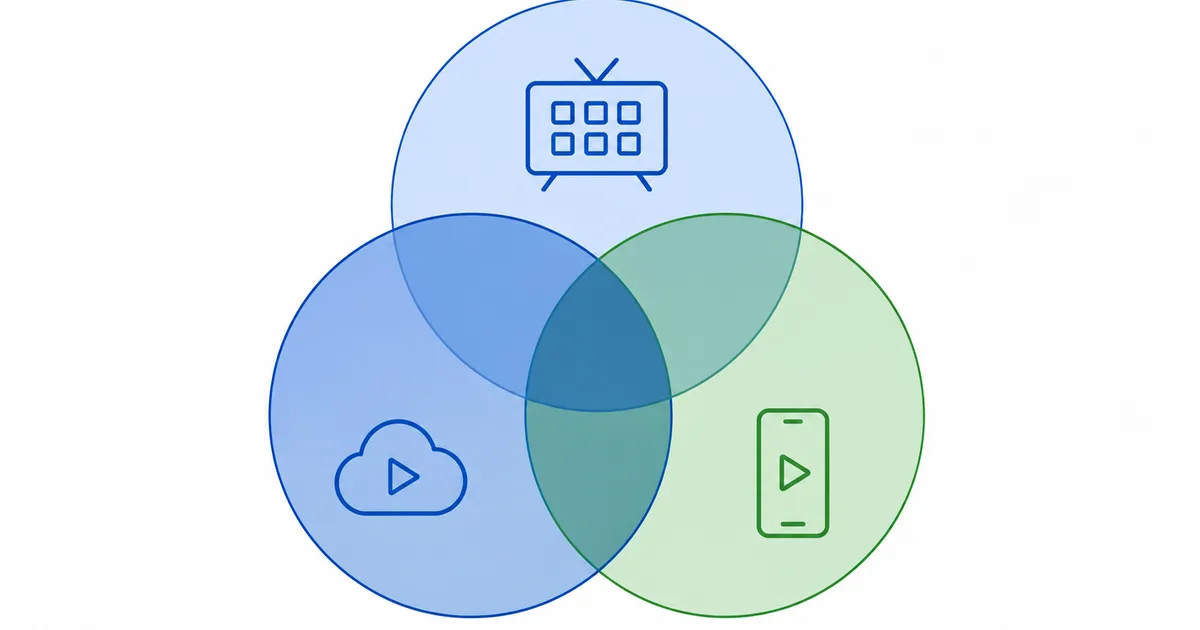
Quick Definitions
Start with a one-line definition of each:
- Streaming is playing audio or video as it downloads, in small chunks, instead of saving the whole file first. It is the umbrella term for everything on this page.
- IPTV (Internet Protocol Television) is television delivered over a managed network — typically your internet provider’s own infrastructure — usually as live channels with a programme guide.
- OTT (Over-the-Top) is video delivered over the open public internet, independent of any provider, to any device — Netflix, Disney+, YouTube and Prime Video are all OTT.
If you are completely new to these ideas, our beginner guides to what IPTV is and how streaming actually works cover the fundamentals first.
Side-by-Side Comparison
The clearest way to see the differences is a direct comparison across the traits that actually distinguish them.
| Trait | Streaming (umbrella) | IPTV | OTT |
|---|---|---|---|
| Network | Any internet connection | Managed / operator network | Open public internet |
| Typical content | Anything (live or on-demand) | Live channels + catch-up | On-demand apps + some live |
| Quality control | Varies | Higher — operator manages the path | Depends on public internet |
| Device freedom | Any device | Often tied to operator box/app | Any device, any connection |
| Business model | Both | Bundled with a subscription/ISP | Direct-to-consumer app |
| Example | The whole category | Magenta TV, Sky Stream | Netflix, Disney+, YouTube |
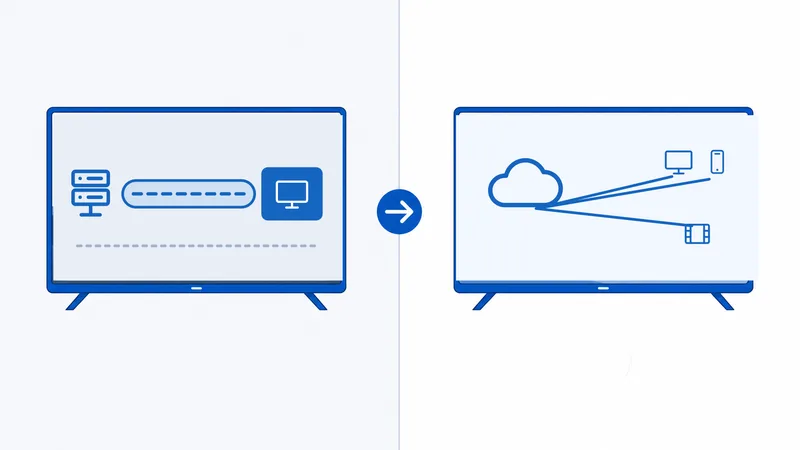
The one row that truly separates IPTV from OTT is network. Managed IPTV runs on infrastructure the operator controls end to end, so it can prioritise the video traffic and reduce buffering. OTT rides the open internet, so its quality depends on your connection and the service’s CDN.
How They Overlap
The confusion is understandable, because the categories genuinely overlap:
- All IPTV and OTT are streaming. Both play video as chunks arrive — the umbrella covers them.
- Some services are both IPTV and OTT. An operator may run managed IPTV on its own network and also offer an OTT app you can use on any connection.
- The words are used loosely. In casual use, “IPTV” often just means “internet TV with channels,” and “streaming” often means “on-demand apps.” Technically, the distinction is the network and delivery model, not the content.
Rule of thumb: if it runs on your operator's own box over their managed line, think IPTV. If it is an app you install and use over any internet connection, think OTT. Either way, the underlying act is streaming.
Which Should You Choose?
Neither model is universally better — they solve different problems:
- Choose managed IPTV when you want reliable live TV and sport with minimal buffering and are happy to use your operator’s box and bundle. It shines for high-demand live events on a controlled network.
- Choose OTT when you value flexibility: a huge choice of independent apps, use on any device, and the freedom to switch providers monthly. It is the backbone of cord-cutting.
- Use both, which is what most European households actually do — an operator package for live channels and sport, plus OTT apps like Netflix and Disney+ for on-demand.
For real-world combinations of licensed services by country, see our guides to streaming in Germany and streaming in France, and pick hardware in our best streaming devices guide.
The Bottom Line
Streaming is the umbrella; IPTV and OTT are two delivery models beneath it. IPTV travels over a managed operator network and leans toward live channels; OTT travels over the open internet and leans toward on-demand apps. The technology is nearly identical — the difference is the road the video takes and the business behind it. In practice, most people use a mix of both without ever needing to label them.
Not sure about a term on this page? Look it up in the streaming glossary.