Streaming Account Sharing Rules Explained 2026 (Europe)

Streaming account sharing in Europe is now household-based: Netflix and Disney+ tie accounts to one home and charge a paid extra member (around €4.99/month) to share beyond it, while Prime and Apple use family-sharing systems. Sharing within your home is fine, limited by simultaneous streams; casual password-sharing between homes is being phased out. This guide explains each service’s rules and what’s actually allowed. It pairs with our multi-device limits guide.
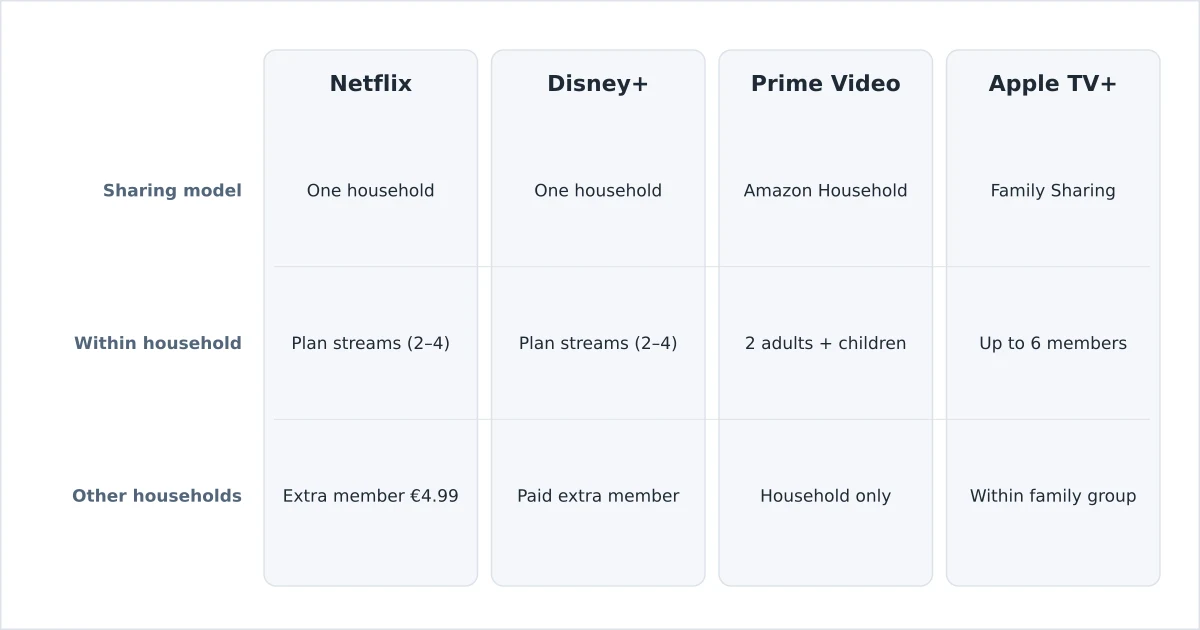
Streaming account sharing rules compared across services
Account sharing in Europe — household-based, with paid extra members for other homes.

The Rules by Service

Service Sharing model Within household Other households
Netflix One household Up to plan streams (2–4) Extra member ≈ €4.99/mo
Disney+ One household Up to plan streams (2–4) Paid extra member
Prime Video Amazon Household 2 adults + children Household sharing only
Apple TV+ Family Sharing Up to 6 family members Within the family group

What “Household” Means

A household is the single home where the account is based. Everyone living there can use it — subject to the plan’s simultaneous streams — including on mobile devices when out and about. What’s changed is sharing with a separate home: that now needs a paid extra member (Netflix, Disney+) or a family-sharing setup (Apple, Amazon), not just handing over the password.

What’s Actually Allowed

  • Everyone in your home — watching together or separately, up to the stream limit.
  • Your own devices when travellingEU portability keeps your account working temporarily abroad in the EU.
  • A paid extra member in another home — the legitimate way to share out.
  • Family sharing (Apple/Amazon) — within your grouped family.
  • Casual password-sharing between separate homes — increasingly blocked or charged.
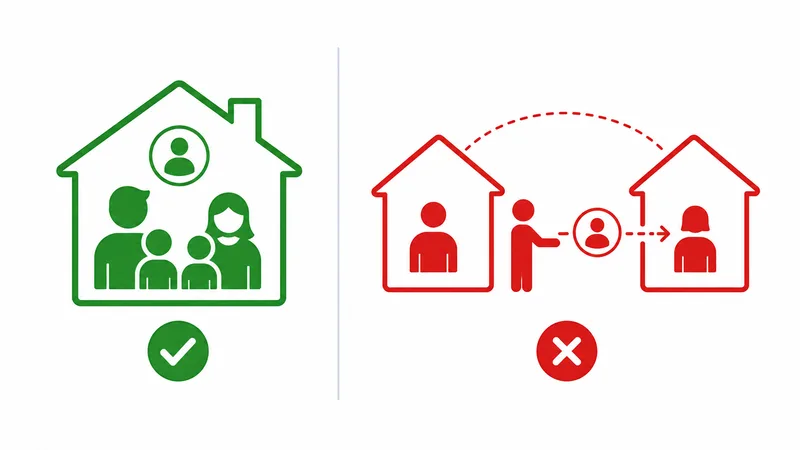
A diagram of what streaming account sharing is and isn't allowed
Allowed — your household and a paid extra member; not allowed — casual sharing between homes.

The Bottom Line

Account sharing in Europe is now household-based: share freely within your home up to the plan’s streams, use a paid extra member to share with another home on Netflix and Disney+, and use family sharing on Apple and Amazon. Casual cross-household password-sharing is being phased out technically. Match your plan’s streams to your household in our multi-device limits guide, cut costs in our save on streaming guide, understand travel access in our EU portability guide, and look up any term in the streaming glossary.

Frequently Asked Questions

Can I still share my streaming password in Europe?

Within your own household, yes — that's allowed, limited by the plan's simultaneous streams. Between separate households, increasingly not without paying: Netflix and Disney+ now restrict accounts to one household and charge for an extra member outside it. Prime and Apple use family-sharing systems. Casual password-sharing across homes is being phased out.

What is Netflix's household rule?

A Netflix account is tied to one household — the home where the account is primarily used. People in that home can watch, limited by the plan's streams (two on Standard, four on Premium). To share with someone in another home, you add a paid extra member for around €4.99/month, rather than simply sharing the password.

How much does an extra member cost?

On Netflix, an extra member outside your household costs around €4.99/month per slot, and Disney+ has introduced similar paid-sharing. This adds a person in another home to your account legitimately, with their own profile. It's cheaper than a full second subscription but only worth it if that person watches enough to justify it.

How does family sharing work on Apple and Amazon?

Apple TV+ uses Family Sharing, letting up to six family members you've grouped together share the subscription. Prime Video shares via an Amazon Household of two adults (plus children) who share Prime benefits. Both are designed for a family group rather than open password-sharing, and have their own setup in the account settings.

Is sharing a streaming account illegal?

It's not a criminal matter, but sharing outside the terms breaches the service's agreement, and services now enforce it technically by detecting out-of-household use and prompting for a paid extra member. So while you won't be prosecuted, cross-household sharing increasingly just stops working or triggers a charge. Staying within household or family-sharing rules avoids the hassle.